Nassim Digital Twin
Le Digital Twin, un levier de transformation pour le bâtiment au Maroc
Dans un contexte marocain marqué par une forte urbanisation, des enjeux de durabilité et une recherche d'efficacité énergétique, l'adoption du jumeau numérique dans le secteur résidentiel présente un potentiel considérable.
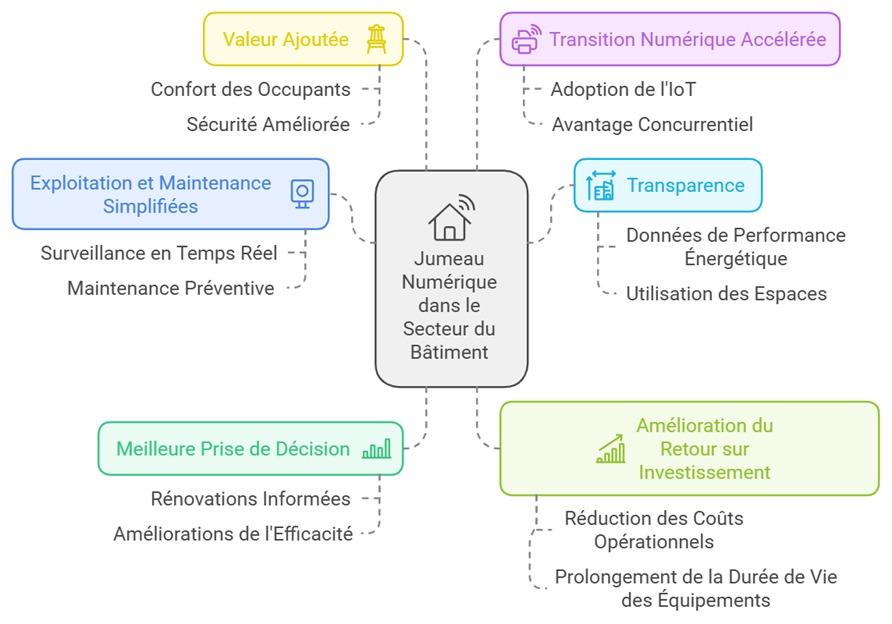
The Digital Twin, a lever for transformation in building in Morocco
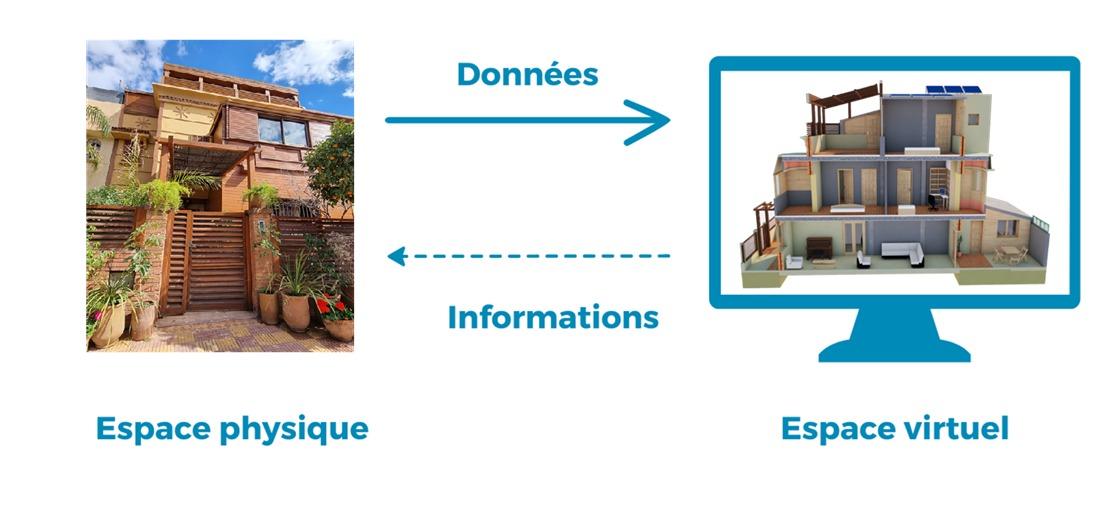
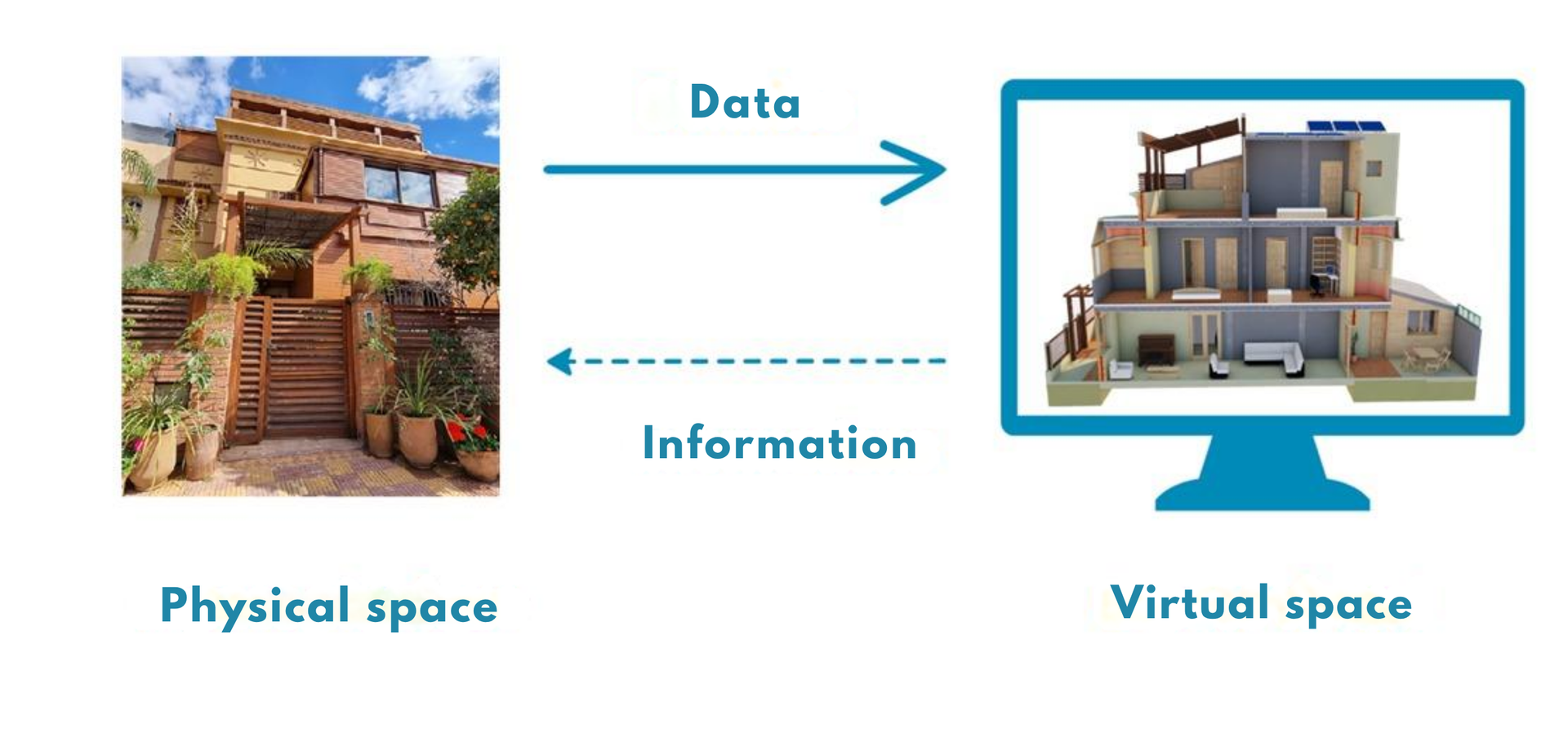
The building sector, in Morocco as elsewhere, is on the brink of a digital revolution. At the heart of this transformation lies the concept of Digital Twin or digital twin: a dynamic and faithful virtual replica of a physical building. Far from being a simple 3D model (BIM), the digital twin is continuously enriched by data captured in real-time (via IoT sensors), allowing it to simulate, predict, and optimise the performance of the building throughout its lifecycle.
In a Moroccan context marked by strong urbanisation, sustainability challenges, and a quest for energy efficiency, the adoption of the digital twin in the residential sector presents considerable potential.
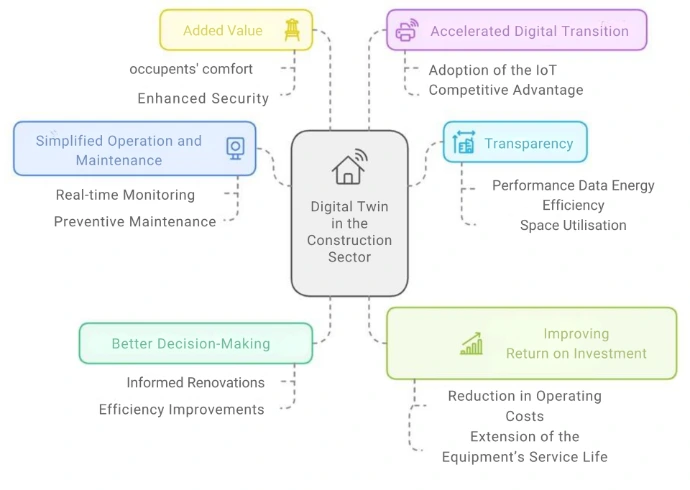
Présentation illustrée du Nassim Digital Twin
Le Nassim Living Lab, un laboratoire à ciel ouvert
Le projet Nassim Living Lab est une initiative avant-gardiste qui sert de démonstrateur pour l'habitat intelligent et durable au Maroc. Il ne s'agit pas seulement de construire un bâtiment, mais de créer un écosystème où les technologies de pointe sont testées en conditions réelles pour améliorer le confort des résidents et la performance du bâtiment. Le projet intègre plusieurs dimensions clés du jumeau numérique :
- Modélisation et Conception Intégrée : Le projet a démarré avec une maquette numérique (BIM) détaillée, intégrant non seulement l'architecture mais aussi les systèmes CVC (Chauffage, Ventilation, Climatisation), la plomberie et les systèmes électriques. Cette maquette constitue le squelette du futur jumeau numérique.
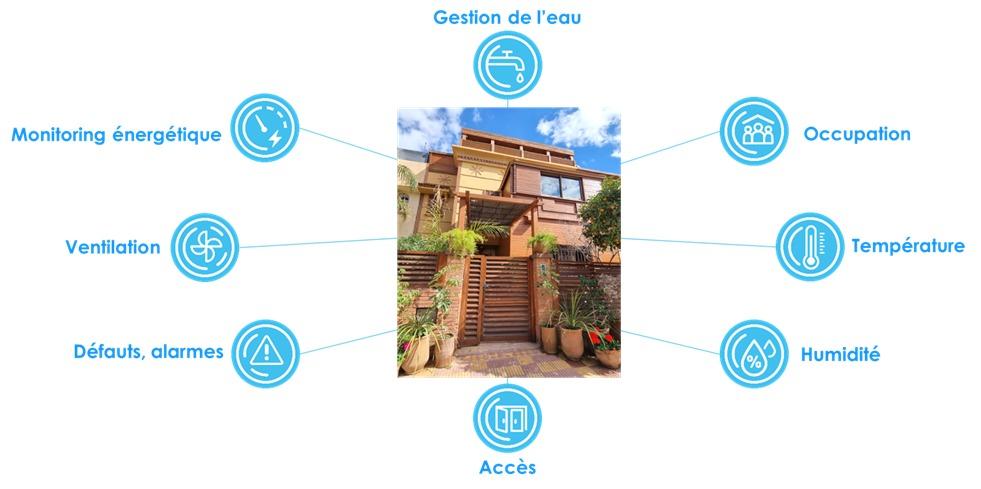
Intégration de l'Internet des Objets (IoT) : Le bâtiment est équipé d'un réseau de capteurs intelligents. Ces capteurs mesurent en continu une multitude de paramètres :
- Qualité de l'air intérieur (CO2, particules fines, humidité).
- Consommation énergétique par appareil et par zone.
- Consommation d'eau.
- Température et luminosité ambiantes.
- Statut des équipements (fenêtres, stores, etc.).
- Modelling and Integrated Design: The project started with a detailed digital model (BIM), integrating not only the architecture but also the HVAC systems (Heating, Ventilation, Air Conditioning), plumbing and electrical systems. This model constitutes the skeleton of the future digital twin.
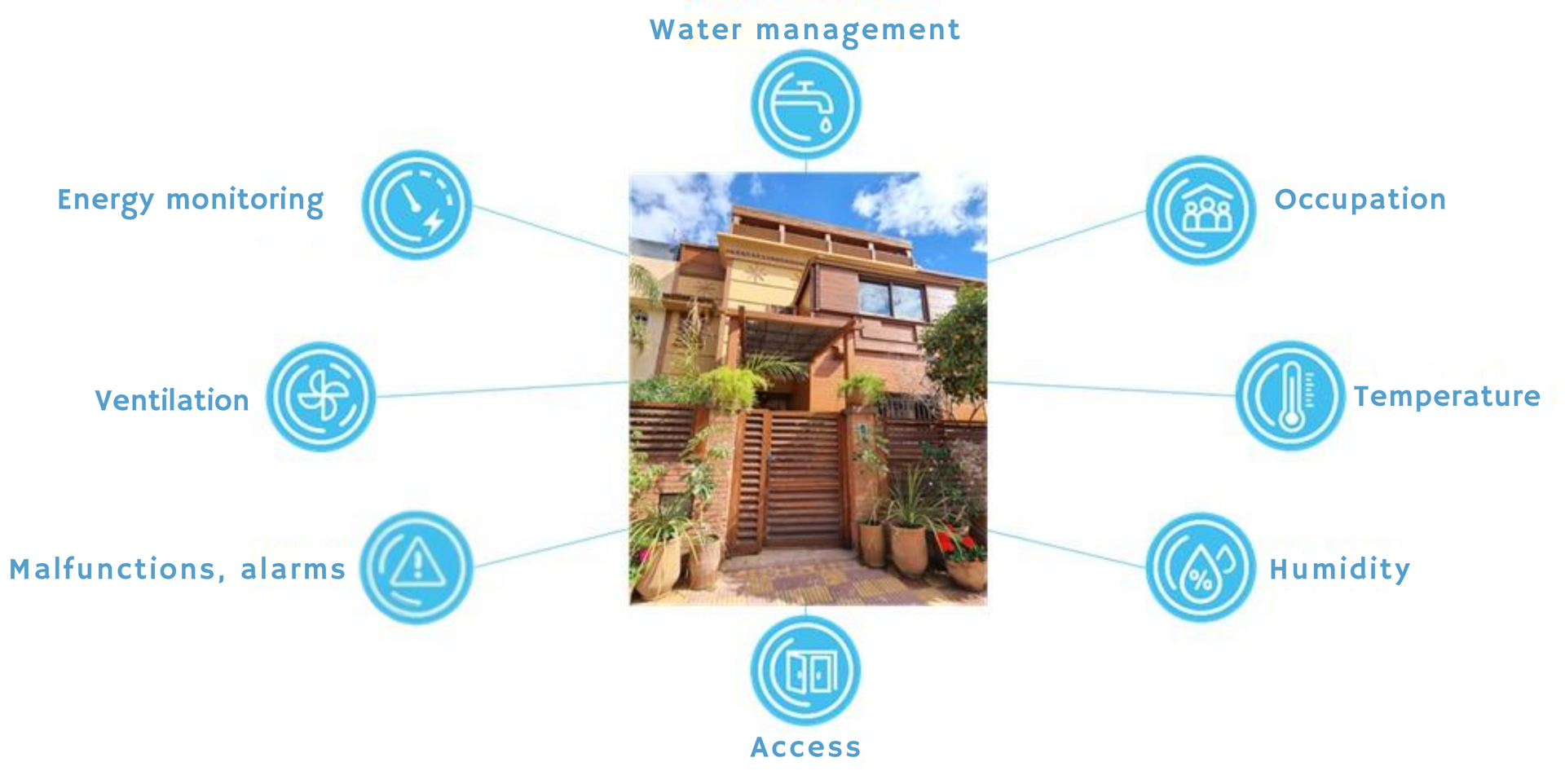
Integration of the Internet of Things (IoT) : The building is equipped with a network of smart sensors. These sensors continuously measure a multitude of parameters :
- Indoor air quality (CO2, fine particles, humidity).
- Energy consumption per device and per area.
- Water consumption.
- Ambient temperature and brightness.
- Status of the equipment (windows, blinds, etc.).
- Pilotage intelligent : Automatisation de la ventilation, du chauffage ou de l'éclairage en fonction de l'occupation réelle et des conditions mesurées, optimisant ainsi le confort et l'énergie.
- Maintenance prédictive : En analysant les données de fonctionnement des équipements, le système peut anticiper les pannes avant qu'elles ne surviennent, permettant une intervention proactive.
- Sensibilisation des résidents : Les habitants peuvent visualiser leur consommation en temps réel via une application, les incitant à adopter des comportements plus écoresponsables.
- Intelligent control : Automation of ventilation, heating or lighting based on actual occupancy and measured conditions, thus optimizing comfort and energy.
- Predictive maintenance : By analysing the operational data of equipment, the system can anticipate failures before they occur, allowing for proactive intervention.
- Awareness of residents : Residents can view their consumption in real time via an app, encouraging them to adopt more eco-friendly behaviours.
© Copyright 2026 - Nassim Living Lab