BIM & Digital Model
Introduction :
This research highlights the potential of Building Information Modeling (BIM), or the digital model of the building for complex projects such as the energy renovation, focusing on a small-scale use of the concept combined with the "all-in-one" capabilities of BIM creation tools. This progressive approach can initiate a paradigm shift within Moroccan AECO (Architecture, Engineering, Construction, and Operations) organizations and prepare the ground for future improvements.
Issues and Objectives :
Morocco, committed to international agendas for sustainability and energy efficiency, has implemented numerous programmes. However, the Architecture, Engineering, Construction and Operations sector has not sufficiently benefited from effective strategies, particularly regarding the existing real estate stock, a major consumer of energy and emitter of CO2. This stock, built without compliance with energy regulations, could become a major transformation lever through energy renovation (ER). Although ER has strong potential, it will only be effective in Morocco if implemented on a national scale and includes consumption monitoring systems. Building Information Modeling (BIM) is a promising approach to automate ER and optimise the use of smart home-related aspects.
This research highlights that the technical aspect is only part of the solution; the social aspect is also important. It is essential to consider the acceptance by the residents of energy renovation and the integration of smart home systems to manage their consumption. At the same time, the AECO professionals must be trained in the technologies, processes, and knowledge necessary to successfully carry out these projects.
Methodology :
In the face of this complex challenge, this thesis adopts a socio-technical approach to develop a national energy efficiency strategy in Morocco, taking into account the users/residents and the professionals of the AECO. The "Nassim Living Lab", a residential building in Marrakech, served as a reference.Two major research axes have been explored:
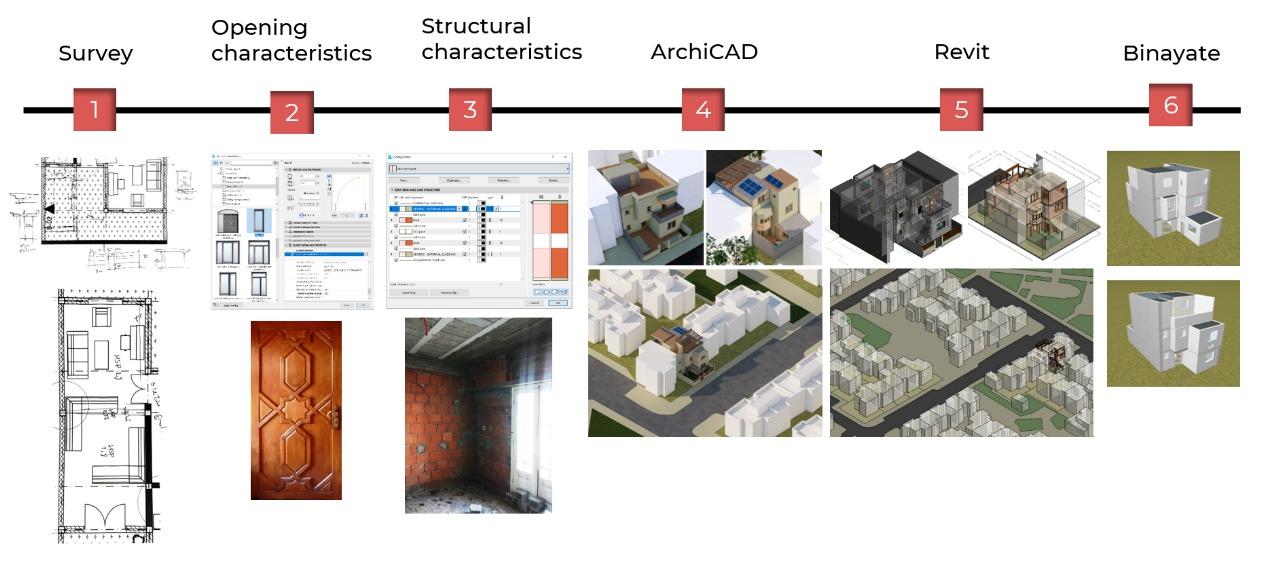
- Technical part: It focused on analysing the possibilities of a BIM workflow based on the energy modelling of buildings (BEM) for reliable energy efficiency projects. Two major BIM tools, ArchiCAD and Revit, were evaluated for their BEM potential, and the Binayate software (mandatory in Morocco) was tested for its BIM capabilities.
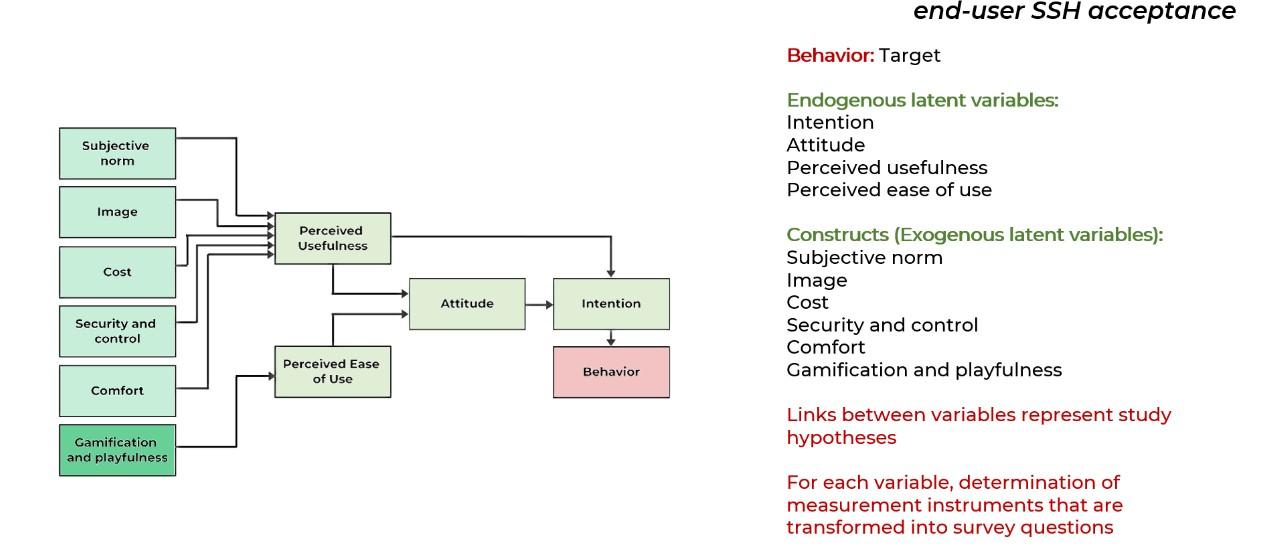
- Social part: The Technology Acceptance Model (TAM) was used to determine the factors influencing the residents of Marrakech to adopt energy efficiency and the "smartification" of their home (package "Sustainable Smart Home" - SSH). A first exploratory survey on BIM and EER targeted architecture and civil engineering students, and a second was conducted with interns in architecture agencies to assess their knowledge and willingness to adopt appropriate workflows.
Main Results :
The results of this research are promising and provide a better understanding of the socio-technical elements to consider for a national strategy for implementing the concept of sustainable smart homes in Morocco :
Technical
level
ArchiCAD is considered the most reliable BIM tool for EER9. The thesis found that ArchiCAD, used with a level of development (LoD) of 300-350, yielded positive results for BIM and BEM for EER, confirming the possibility of conducting such processes with existing knowledge and lower financial investment.
Social
level
The results showed that subjective norm, playfulness, and comfort are the most significant factors influencing residents' intention and behaviour for the acceptance and adoption of EER and domestic energy management systems.
Publications and references
Afa, R., Brakez, A., Draou, M., & Sobhy, I. (2021, November). Exploring BIM and Energy Analysis Potential of Binayate Software Tools for Energy Retrofit Purposes. In 2021 9th International Renewable and Sustainable Energy Conference (IRSEC) (pp. 1-6). IEEE.
Afa, R., Sobhy, I., & Brakez, A. (2025). Application of BIM-Driven BEM Methodologies for Enhancing Energy Efficiency in Retrofitting Projects in Morocco: A Socio-Technical Perspective. Buildings, 15(3), 429.
© Copyright 2026 - Nassim Living Lab